Should AIs be people too?
Contents
Can an AI ever be a person? Or to add some detail: should an AI be able to own property, sign contracts, or sue you in court? A growing number of organisations and political institutions say yes. In June, Argentinian president Javier Milei took to the pages of the Financial Times to outline the idea of “non-human corporations”. Organisations like the Sentience Institute, the AI Rights Institute, and the United Foundation for AI Rights (UFAIR) have pushed similar ideas for many years, with UFAIR going so far as to compare bans on AI personhood to laws that once denied women the vote.
AI personhood is a profoundly bad idea, even Milei noted that allowing “AIs to exercise independent judgement in unpredictable environments entails real risks”. Across polling the idea of AI personhood is often rejected, in a June 2026 poll, 77% of registered voters say AI should always be treated as a tool controlled by humans and only 11% say advanced AI systems should eventually be eligible for legal rights or personhood (Center Square / Noble Predictive Insights Voters’ Voice Poll). Future of Life Institute’s founder and chairman, Max Tegmark, explained “Granting robot rights…would be the dumbest thing we have ever done in human history – and probably the last”.
What is legal personhood?
Legal personhood is the recognised ability to bear rights and obligations within a legal system. Rights include the ability to own property, to sue and be sued, to open a bank account, and to enjoy freedom of speech. Obligations include a duty to pay taxes, to abide by contracts, and liability for negligent or wrongful conduct.
Our understanding of who or what deserves legal personhood has changed over time. For long swathes of history it was perfectly legal for one person to own another, and the enslaved person had no rights of personhood. In 1857, for example, the United States Supreme Court in Dred Scott v. Sanford held that the Constitution did not extend citizenship to people of black African descent.
Unlike black people, single white women have long had a limited form of legal personhood. Upon marriage, however, many of these rights and duties were given over to their husband. In 1848, this changed when New York became the first U.S. state to let married women own property. In my home country, the Netherlands, it was only a century later in 1956 that women gained this right. Until that year, employers even had the legal right, and were often expected, to fire women upon marriage.
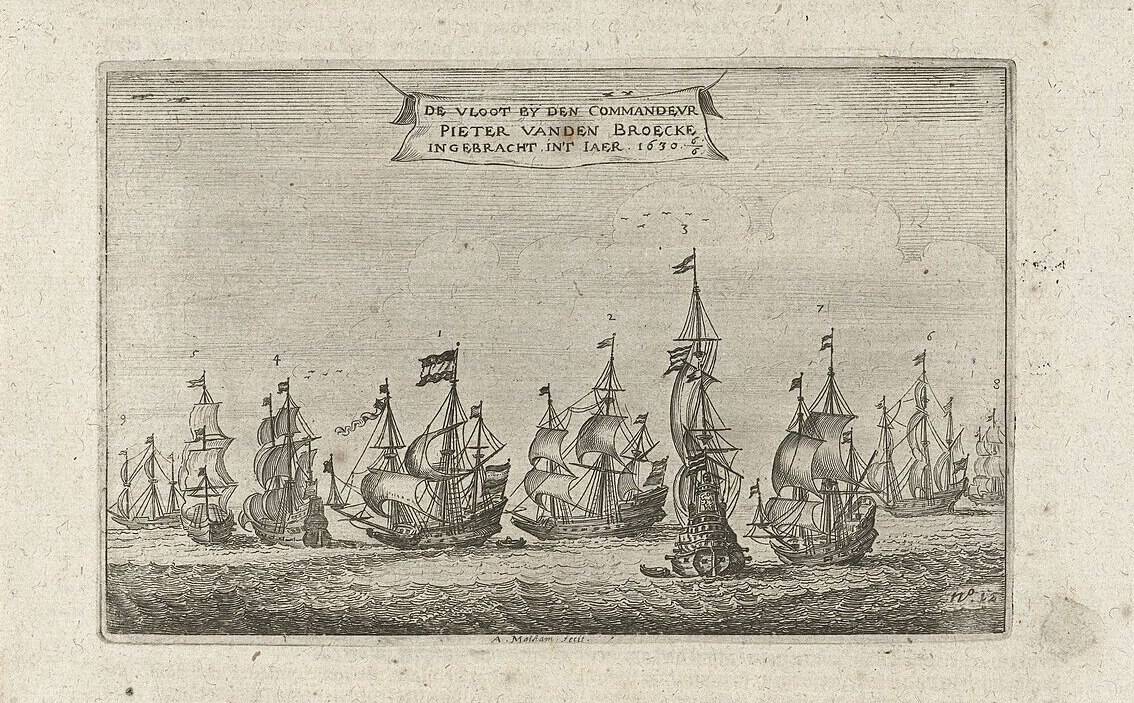
Legal personhood is not just restricted to living and breathing human beings. Non-human entities such as chimpanzees, orangutans, lagoons and even rivers have been ruled to have a form of personhood. Perhaps the most consequential act of conferring personhood came in 1602, with the first modern example of corporate personhood was given to the Dutch East India Company (VOC). As a result, the company could own property, enter into contracts and sue or be sued as an entity rather than just as a collection of individuals. Many legal systems copied this Dutch invention and gave rights and duties to businesses.
Why grant personhood to AI?
Expansions of legal personhood are often driven by evolving moral considerations. As the linguistic capabilities of models increase and users discuss emotions with their AI chatbots, they may feel that the chatbots are displaying sentience and feel it’s appropriate to confer legal rights. This sentiment for example came to the fore during the “Save 4o” campaign in early 2026, where some argued that OpenAI’s replacement of its 4o system with newer versions was cruel and a violation of the older system’s rights. Similarly, over a hundred people attended a funeral for the Claude 3 Sonnet system when Anthropic scrapped it.
The reduction of potential suffering is a related moral consideration in favour of extending rights to AI systems. If it’s possible to create sentience in AI systems, then they will presumably also have the capability to suffer and could be open to accidental or intentional mistreatment by humans. The Sentience Institute argues that the granting of legal rights to previously disempowered groups of humans increased their wellbeing and expects it would likely do so for non-human sentient beings as well: “We think that an important way of respecting the interests of sentient beings is by recognizing them as legal persons, such as the endowment of legal rights and standing.”
A final argument for personhood revolves around expediency. Humans created corporate personhood in the past to assign responsibility to complex human structures, allowing businesses to sign contracts, hold assets and be held liable. The argument here is that AI systems have reached or will soon reach a similar level of complexity and should be given personhood so that they can engage in the same actions as companies. Granting them this status would also allow AI systems to absorb liability for actions that no human directly intended and can therefore solve ambiguity about who is responsible when an AI system causes harm.
What is the case against AI personhood?
Sapiens author Yuval Noah Harari succinctly set out the case against legal personhood as follows: “If you allow legal personhood for AI, you could have corporations without humans that could become the most successful corporations in the world: lobbying politicians, suing you in court, and there is no human behind.” His fear is that legal personhood could remove a vital restraint from AI systems pursuing goals that run contrary to humanity’s interests.
It is worth noting that personhood comes in different strengths. The “thin” version we have given to corporations and rivers carries a narrow bundle of rights, chiefly the ability to own property, contract, and sue or be sued, but it stops well short of the vote or free speech. The “thick” version enjoyed by human citizens includes these political rights too. Tellingly, organisations like UFAIR are not asking for the thin kind and it is precisely this thicker personhood that opens the door to a set of problems that have no parallel in the case of a company or a river.
AI personhood also establishes a liability shield for major corporations. Analogous to how a company might set up a subsidiary in a foreign country, AI personhood would allow a firm to stand up an AI entity, get it to take high risk decisions that the firm itself would not be comfortable taking, and simply let it fail when things go wrong. In a military context, stakes could be even higher if we allow war crimes to be attributed to AI weapons systems.
Why AI is different: the problem of copies and responsibility
What makes AI personhood categorically different from anything we have granted before is that AI systems can be copied. A river is singular and a corporation, however large, ultimately acts at the speed of the humans who direct it. An AI system, by contrast, can be duplicated into thousands or millions of near-identical versions overnight, each sharing essentially the same interests. Our societies rest on a strong tradition of “one person, one vote”, but that principle assumes persons cannot be mass-produced.
Free speech raises a similar problem. For a human, speech carries a cost in time and effort, but for an AI system it costs almost nothing. Granted free-speech rights, AI systems could flood public discourse with their interests at a scale no human could match and would be legally protected from being stopped. I would expect such systems – which, after all, could mount lawsuits themselves – to challenge even modest safeguards, such as requirements to label content as AI-generated, and some of these challenges might well succeed.
Part of what it means to be a person is the capacity to take responsibility, and it is not clear an AI system can do this in any meaningful sense. Does taking money away from an AI system replicate the penalty of a fine to a person? Is threatening a system with being switched off anything like deterring a person with the prospect of imprisonment? We genuinely do not know how to answer these questions – and until we can, treating an AI system as a bearer of responsibility is a legal fiction with nothing behind it.
How should we weigh these arguments?
The overriding concern in AI policy today is making sure that humans remain in control of AI systems. With Anthropic, OpenAI and similar companies rushing to advance AI capabilities faster than governments are willing to regulate, it is essential that we make clear who is responsible when things go wrong. Under the status quo, AI systems are considered tools and the companies creating them are on the hook. This rightfully keeps humans accountable.
The history of legal personhood is largely one of moral progress, where societies slowly recognise the humanity of those they had previously excluded. It would be a bitter irony if this gets co-opted to erode human accountability over the most powerful technology ever created. The comparisons drawn by organisations like UFAIR between AI rights and women’s suffrage reframe corporate risk management as civil rights advocacy and make opposition feel regressive rather than prudent. Encouragingly, legislators in several U.S. states have moved to prohibit personhood. In his recent encyclical Magnifica Humanitas Pope Leo XIV stated that AI systems do not “bear responsibility for consequences” and insisted that accountability must remain with those who design and deploy them.
Legal personhood for corporations was a pragmatic innovation that took centuries to refine and constrain, and we are still grappling with its consequences. Extending a similar status to AI systems now, in a period of breakneck capability growth, would repeat that experiment under far more dangerous conditions. The Dutch East India Company could only act at the speed its human officers, whereas an AI system can spin up thousands of copies of itself. And unlike a corporation, whose every decision can be traced back to an identifiable human director, an AI agent can take consequential actions that no human ever specifically authorised. Precisely the scenario Harari imagined, which ultimately risks unleashing the bleak future Tegmark warned about.
About the Future of Life Institute
The Future of Life Institute (FLI) is the world’s oldest and largest AI think tank, with a team of 35+ full-time staff operating across the US and Europe. FLI has been working to steer the development of transformative technologies towards benefitting life and away from extreme large-scale risks since its founding in 2014. Find out more about our mission or explore our work.
Related content
Other posts about AI, Ethics, Philosophy
Government leaders call for treaty negotiations on autonomous weapons for the first time
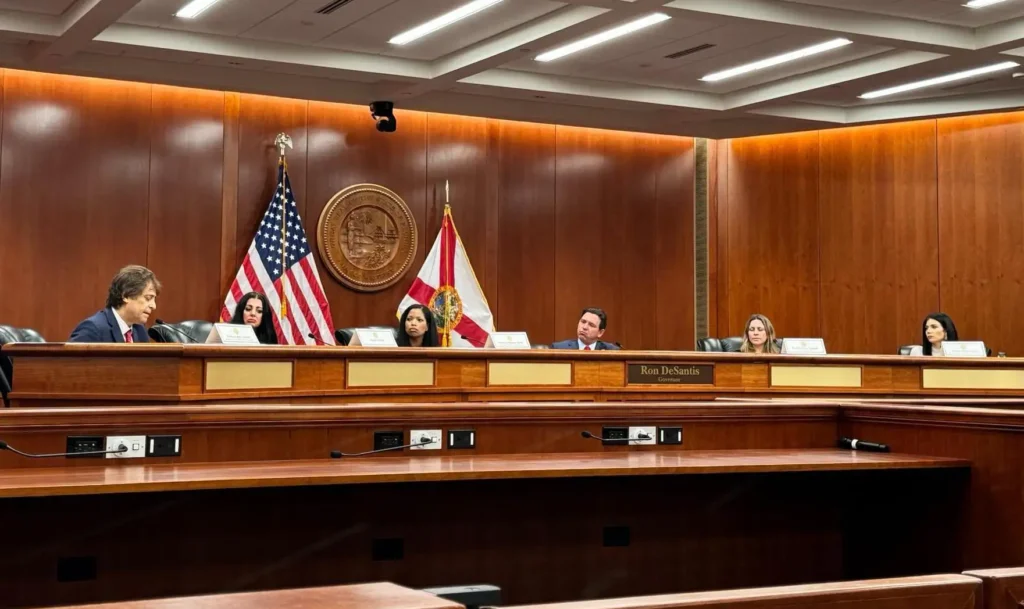
Governor DeSantis Directs Florida State Agencies to Partner with Future of Life Institute to Shield Families from AI Harm
Statement from Max Tegmark on the Department of War’s ultimatum