Future of Life Institute Launches Multimillion Dollar Nationwide AI Regulation Campaign

Contents
CONTACT
Chase Hardin
chase@futureoflife.org
WASHINGTON, D.C. — Today, the Future of Life Institute (FLI) launched Protect What’s Human, a new multimillion dollar campaign to rally people across the country in support of regulating AI and protecting what matters most. The campaign will take the debate about AI out of Washington and Silicon Valley, and could spend up to $8 million to engage the millions of Americans who are already feeling AI’s impact, starting in Iowa, Kentucky, Maine, Michigan, and North Carolina.
The Protect What’s Human campaign kicks off as Big Tech anti-regulation PACs pour massive resources into polarizing this fight and electing Silicon Valley-anointed candidates this year. Outside of D.C. and the Bay Area, regulating AI enjoys massive bipartisan support, including from President Trump’s voters, who are concerned about their leaders’ close ties to Big Tech. Everyday Americans’ perspective is missing from the 2026 election conversation — that’s why the campaign will not only spotlight their stories but show how policymakers are at odds with their constituents on this issue.
“Silcon Valley corporations are creating technology designed not to help us, but to replace us. AI is already erasing human jobs, creeping into our most intimate spaces, and influencing young minds in deeply troubling ways. That’s why we need to act now to put common-sense safety standards in place, just as we’ve done with every other powerful technology and industry,” said Anthony Aguirre, CEO of the Future of Life Institute. “This campaign isn’t anti-tech, it’s pro-human. We believe in progress and innovation, but never at the expense of our dignity, our communities, or our families.”
As the ads argue, “our hands built America – hands that carve, shape, teach and care. We’ve always had tools that made us faster and more capable, but they never replace the people who held them because a machine can’t take pride in a hard day’s work or teach a son right from wrong. Because the most important intelligence is Human. That’s why the hands who built this country must build what comes next.”
“AI has invaded our homes and children’s lives, often without parents even realizing it. Our laws just aren’t keeping up with this new technology’s predatory behavior and we urgently need to put it back under human control before it’s too late,” said Megan Garcia, a mother who brought the first lawsuit in the country against an AI chatbot company after the suicide of her 14-year-old son. “Families, teachers, and doctors should care for our kids, not machines designed to get more clicks for money.”
The campaign is making an initial six to seven figure investment in each state as several consider new AI regulation laws to protect their residents’ safety, privacy, jobs, and healthcare. A large majority of Iowans, Kentuckians, Mainers, Michiganders, and North Carolinians express strong support for regulating AI and Protect What’s Human will provide a springboard for further movement around commonsense AI safety measures.
About the Future of Life Institute
The Future of Life Institute (FLI) is the world’s oldest and largest AI think tank, with a team of 35+ full-time staff operating across the US and Europe. FLI has been working to steer the development of transformative technologies towards benefitting life and away from extreme large-scale risks since its founding in 2014. Find out more about our mission or explore our work.
Related content
Other posts about Press release

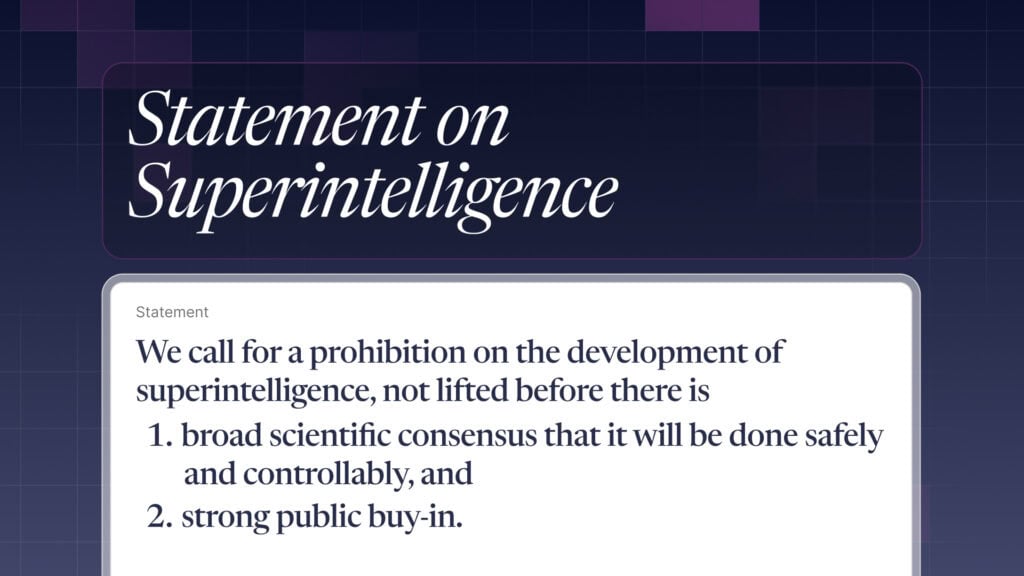
Prominent Scientists, Faith Leaders, Policymakers and Artists Call for a Prohibition on Superintelligence, as Poll Shows Americans Don’t Want It
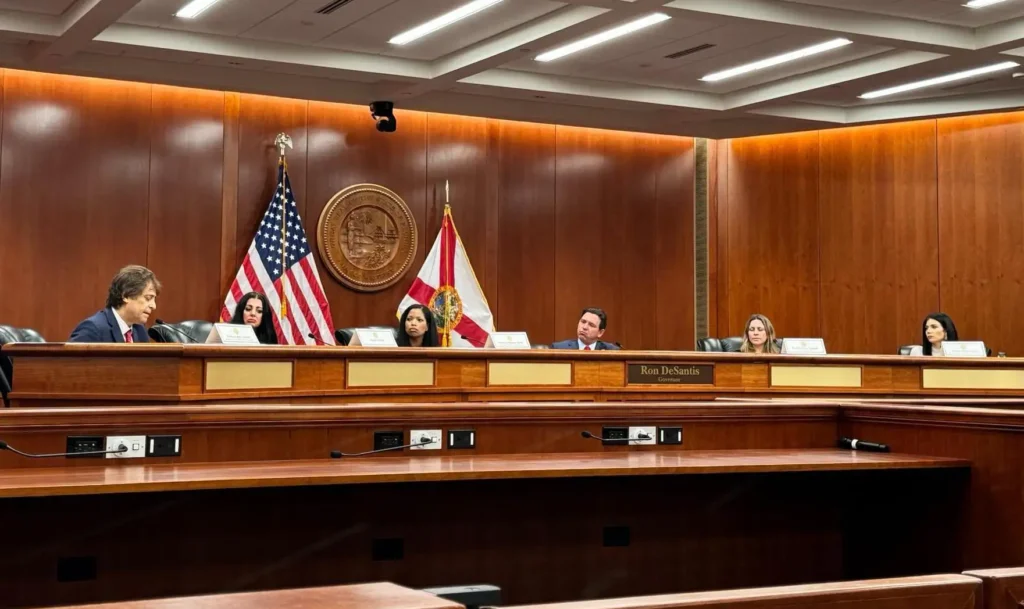
Governor DeSantis Directs Florida State Agencies to Partner with Future of Life Institute to Shield Families from AI Harm
“This is What it Means to be Pro-Human” Declares Broad Coalition of Conservative, Progressive, and Civil Society Groups in Statement of Shared Principles on AI
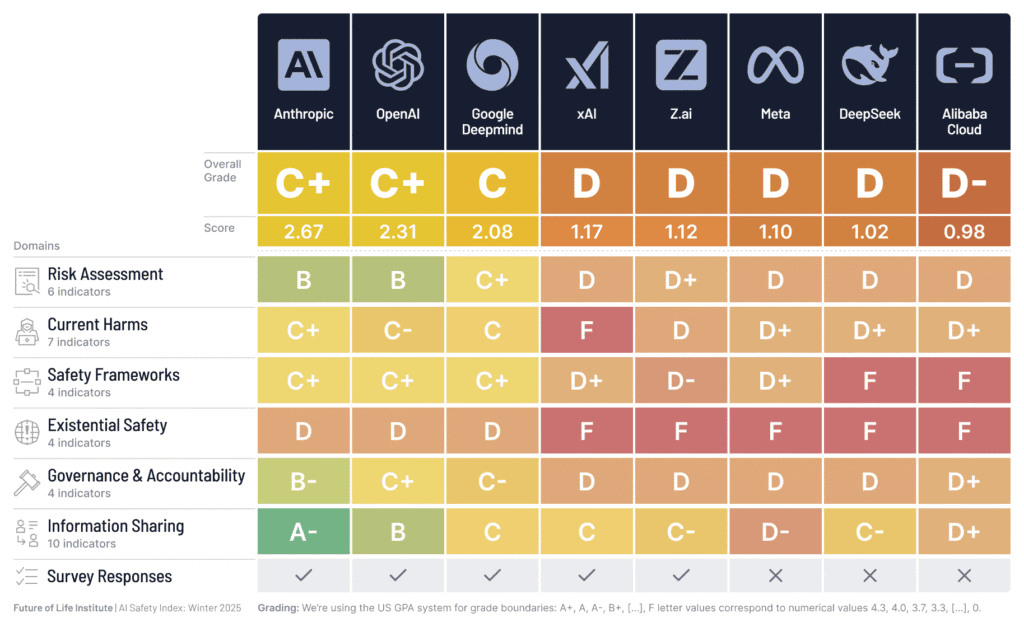
AI Company Safety Practices Fall Short of Public Commitments and Show Structural Weaknesses, as Top Performers Widen the Gap
Some of our Communications projects

Control Inversion