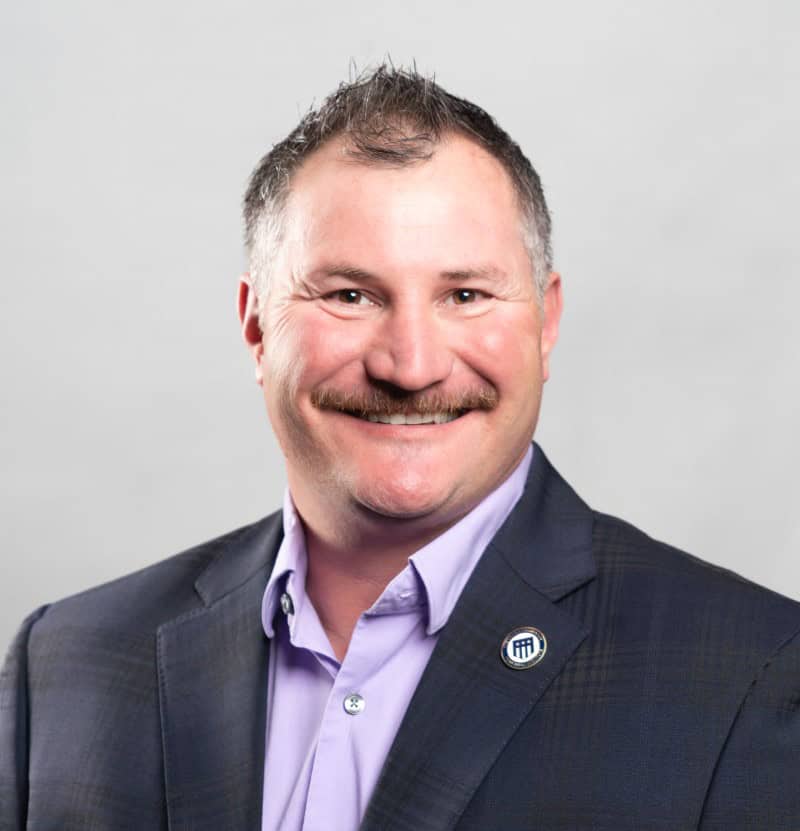
Matthew Tripoli
Why do you care about AI Existential Safety?
I care about AI existential safety because advanced AI may become a decisive factor in humanity’s ability to manage high-consequence technologies responsibly. My background is in Navy Explosive Ordnance Disposal, CBRNE operations, and homeland security, so I have spent much of my career thinking about how dangerous capabilities move from theory to practice, how systems fail under pressure, and how small mistakes can escalate when the consequences are severe.
I am especially concerned that frontier AI systems could reduce barriers for motivated actors seeking chemical, biological, radiological, nuclear, or explosive capabilities. The danger is not only that a model might provide harmful information. The deeper concern is that it could help users plan, troubleshoot, prioritize, and persist through failure in ways that increase real-world capability.
I care about this field because AI safety needs both technical insight and grounded threat judgment. I want to help ensure that catastrophic misuse risks are understood before they become operational realities.
Please give at least one example of your research interests related to AI existential safety:
One of my main research interests is AI-enabled threat uplift in CBRNE and biosecurity contexts. I am interested in how frontier AI systems may change the capability curve for motivated non-state actors by helping them overcome barriers that have historically limited their ability to cause real-world harm. This includes not only access to information, but also planning support, troubleshooting, prioritization, procurement reasoning, operational sequencing, and interpretation of failed attempts.
My current work uses Aum Shinrikyo as a historical case study. Aum had intent, money, educated personnel, international reach, and sustained commitment, yet still failed repeatedly in its chemical and biological weapons efforts. Those failures were not only technical. They involved poor prioritization, flawed assumptions, weak feedback loops, organizational dysfunction, and difficulty interpreting failure. I am interested in whether advanced AI systems could help future actors overcome those same bottlenecks.
This raises a broader AI safety evaluation question: are current evaluations of dangerous capabilities measuring the right thing? A model may refuse direct harmful instructions while still providing distributed assistance across planning, diagnosis, literature interpretation, procurement logic, or operational decision-making. I am interested in evaluation methods that assess whether AI systems help users navigate a dangerous capability pathway over time, rather than only testing whether a model produces a single prohibited answer.
A second research interest is practitioner-informed misuse detection. My operational background in EOD and CBRNE work has shaped how I think about indicators, escalation thresholds, and weak signals. Dangerous activity often becomes visible through patterns: precursor interest, access attempts, concealment behavior, delivery concepts, safety workarounds, and repeated troubleshooting. I am interested in how AI safety teams can incorporate this type of operational threat modeling into monitoring, red teaming, and governance.
Long-term, I want to contribute to work that bridges frontier model safety, catastrophic misuse prevention, and real-world CBRNE risk. My goal is to help develop safeguards and evaluation frameworks that account for how dangerous actors actually learn, adapt, fail, and improve outside controlled lab settings.