Magnificent Humanity – The Pope’s First Encyclical Concerns AI
Contents
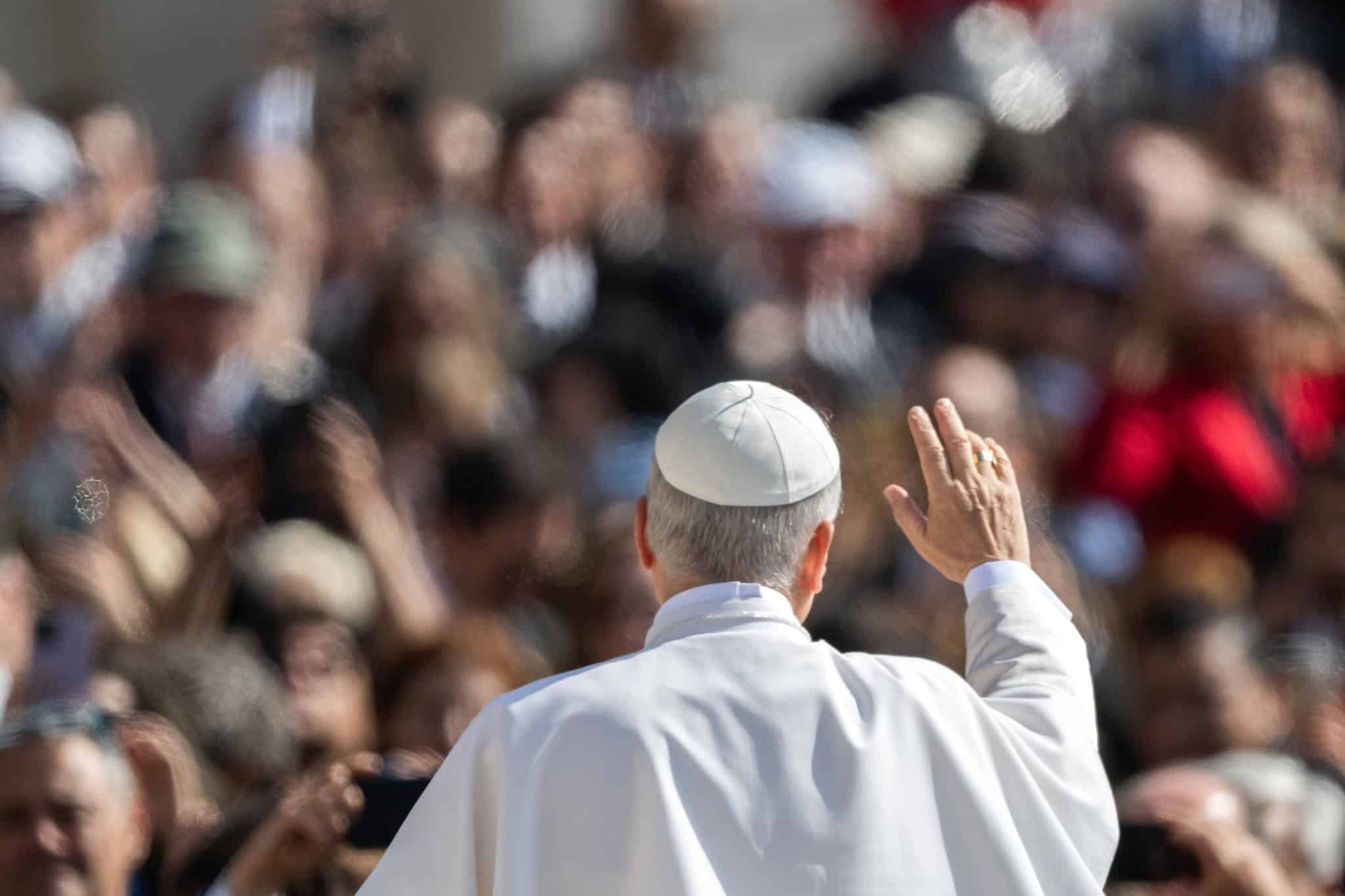
The Vatican has announced that Pope Leo XIV will release an encyclical on AI on May 25th 2026. But what is an encyclical and why is this important not just for Catholics, but all people who care about making sure that AI safely serves humanity?
What is an encyclical?
Think about the difference between an off-the-cuff remark, a considered judgment, and a solemn oath. In ordinary life, there are different levels of seriousness and commitment by which we say things. There is a similar pattern in Catholic teaching. Remarks by the Pope at a press conference, or on the Vatican’s X account, do not carry the same weight as an official proclamation (called a “magisterial” statement, from the Latin word for teacher). An encyclical is a letter — more like a short book — written by the Pope. It is first addressed to the Catholic bishops. Think of it as a set of formal orders from a general to his lieutenants, expected to be implemented with some latitude for local circumstances.
Some encyclicals are mostly internal documents; others are also expressly addressed “to all people of good will.” These are part of what is known as Catholic Social Teaching — the Church’s understanding of how to promote human flourishing on Earth, even while still looking towards Heaven. The most famous recent example is Pope Francis’s encyclical Laudato Si’ , On Care for our Common Home, which addressed climate change and condemned both unfettered capitalism and technocratic control. But perhaps more relevant to the current Pope Leo’s encyclical is a foundational document of modern Catholic Social Teaching: Pope Leo XIII’s 1891 encyclical Rerum Novarum, Of New Things. This encyclical, issued at the height of the Industrial Revoltuion, addressed the era’s extraordinary technological change and the plight of workers, emphasizing that private property is meant as a good for everyone, and therefore endorsing unions, a living wage, and reasonable working hours and conditions.
Why Care About the Pope’s Take on AI?
Everyone has a take on AI. Why care about what a mild-mannered gentleman named Bob from Chicago thinks, just because he was elected Supreme Pontiff? First of all, it’s not just the Pope’s document; the draft has been underway for months, with inputs from dozens of scholars and clerics, and represents the considered judgment of the billion-member-strong Catholic Church. More importantly, that Church is speaking from a two thousand year tradition of reflection upon the meaning of human life. Advanced AI is compelling us to ask what it means to be human, and one does not have to be Catholic to appreciate the insight which the Church offers, again, to “all men and women of good will.”
The title itself should offer some insight into its contents: Magnifica Humanitas, or Magnificent Humanity. In a time when AI presently risks diminishing our personal agency, and opens up further risks to humanity as a whole, it is helpful to be reminded of the distinctive goodness of being human. Based on the Pope’s earlier comments, we can expect discussion of the “sacred” – or at least the unique – character of the human face and voice; of the dignity of labor, which develops the worker’s capacity and is not reducible to economic value; of the importance of protecting children, ensuring that they are not isolated or manipulated by products that pretend to be their friend; and of the importance of a politics of the common good, which regulates markets and technology to ensure that they serve us all, rather than becoming the masters of many.
The uniting thread through discussions of the various implications and situations of AI will be the Church’s vision of the human person as created in love and for love, endowed with a unique dignity, and therefore called to responsibility in using our gifts and talents for the benefit of all.
Finally, the fundamental method of Catholic Social Teaching is “see, judge, act.” A document such as Magnifica Humanitas is promulgated to judge particular circumstances — here, the present deployment and trajectory of advanced AI — in light of perennial principles. It then becomes morally binding upon Catholics to act upon what the Pope proclaims, in whatever way relevant to their role and position. And this action is not meant to be within a bubble, but as salt and light for the world, working towards the common good of all.
For everyone seeking to promote the future of life, then, this encyclical is a hopeful sign and may even prove to be a turning-point in our efforts to ensure that the transformative technology of AI is steered away from risk and towards benefiting all life.
About the Future of Life Institute
The Future of Life Institute (FLI) is the world’s oldest and largest AI think tank, with a team of 35+ full-time staff operating across the US and Europe. FLI has been working to steer the development of transformative technologies towards benefitting life and away from extreme large-scale risks since its founding in 2014. Find out more about our mission or explore our work.
Related content

Government leaders call for treaty negotiations on autonomous weapons for the first time
Statement: World leaders at the UN call to rein in superintelligence race

AI and the Protestant Vision of Spirituality, Work, and Technology
Statement: Anthropic warns of AI self-improvement risks, considers a pause
Some of our Communications and Policy & Research projects

Control Inversion